Field Hockey Diary…
- 80

Field Hockey World Cup (FIH Word Cup) :
The Field Hockey World Cup (FIH Word Cup) is a prestigious international tournament that showcases the best of field hockey on a global stage. Here are some key details about the Field Hockey World Cup:
Inauguration: The first Men’s Hockey World Cup was held in 1971, while the Women’s Hockey World Cup was introduced in 1974.
Frequency: The tournament is typically held every four years for both men and women. However, there have been some variations in the schedule.
Participation: National teams from around the world compete in the tournament. Qualification is based on regional and continental tournaments.
Format: The tournament typically follows a round-robin format, with teams divided into groups. The top teams from each group advance to the knockout stages, which include quarter-finals, semi-finals, and a final match.
Host Countries: The host country for the Field Hockey World Cup rotates among different nations. Host countries are selected through a bidding process conducted by the International Hockey Federation (FIH).
Successive Winners: Nations like the Netherlands, Australia, Germany, and India have historically performed well in both the men’s and women’s tournaments.
Prominence: The Field Hockey World Cup is considered one of the most prestigious events in the sport, alongside the Olympic Games and the Hockey World League.
Women’s vs. Men’s: While both tournaments are highly competitive and attract significant attention, the men’s and women’s World Cups are separate events held in different years.
Legacy: The Field Hockey World Cup has contributed to the growth of the sport worldwide and has provided memorable moments in the history of field hockey.
The tournament serves as a showcase for top-level field hockey talent and brings together fans, players, and officials from around the globe. It is a moment of pride and excitement for participating nations and a major milestone in the field hockey calendar.

Traditions Field International Hockey (FIH) World Cup :
The Field International Hockey (FIH) World Cup, like many international sporting events, has its own set of traditions and customs that add to the tournament’s cultural significance and sense of camaraderie. Here are some of the traditions associated with the Field Hockey World Cup:
Opening Ceremony: The tournament typically kicks off with an elaborate opening ceremony. Host countries often put on a spectacular show that includes cultural performances, music, and dance, showcasing the rich traditions and heritage of the hosting nation.
Team Uniforms: National teams participating in the World Cup often wear traditional or specially designed uniforms that represent their country’s colors and symbols. These uniforms are a source of national pride and are closely associated with the team’s identity.
National Anthems: Before each match, the national anthems of the competing teams are played. Players and fans stand in respect, and it’s a moment of great significance that signifies the representation of their country on the international stage.
Fair Play: The World Cup promotes the values of fair play and sportsmanship. Players and teams are expected to uphold these values, and awards are often given for fair play and good conduct.
Mascots: Like many major sporting events, the World Cup often has an official mascot associated with it. The mascot represents the tournament and its host country, and it’s featured in promotional materials and events.
Cultural Exchanges: The Field Hockey World Cup provides an opportunity for cultural exchange between teams and fans from different countries. Fans often bring flags, banners, and costumes representing their nations, creating a colorful and vibrant atmosphere.
Fan Chants and Cheers: Fans attending World Cup matches often have their own chants and cheers to support their teams. These chants create an electric atmosphere in the stadiums and add to the excitement of the matches.
Trophy Presentation: The tournament concludes with a grand trophy presentation ceremony. The winning team is awarded the coveted trophy, and players celebrate with joy and pride. It’s a moment of great significance and emotion.
Legacy Projects: Many World Cup host countries undertake legacy projects aimed at promoting field hockey at the grassroots level, building new facilities, and leaving a lasting impact on the sport within the host nation.
These traditions and customs make the Field Hockey World Cup more than just a sporting event; they create a sense of unity among nations, celebrate the sport’s rich history, and showcase the cultural diversity of the participating countries.

Prize Money and Trophies FIH World Cup
The prize money and trophies for the FIH Hockey World Cup can vary from year to year and may depend on various factors, including sponsorship deals and the host country’s financial arrangements.
Prize Money:
Prize money for the FIH Hockey World Cup is usually awarded to the top-performing teams in both the men’s and women’s tournaments. The prize money distribution typically includes rewards for the winners, runners-up, and sometimes the teams that finish in lower positions. However, the exact prize amounts can change with each edition of the tournament.
Trophies:
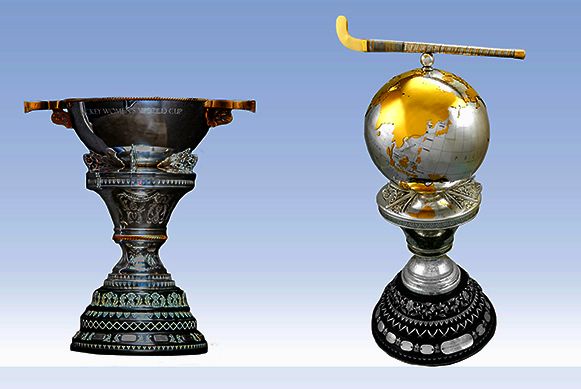
The FIH Hockey World Cup champions are awarded distinctive trophies for both the men’s and women’s tournaments. These trophies are unique to the event and represent the pinnacle of achievement in field hockey. The design of the trophies may evolve over time, but they typically feature elements that symbolize the sport and the FIH.
The trophy for the Men’s FIH Hockey World Cup is traditionally called the “Hockey World Cup Trophy,” while the trophy for the Women’s FIH Hockey World Cup is known as the “Hockey World Cup for Women Trophy.” These trophies are highly sought after by national teams, and they are presented to the winning teams during the tournament’s closing ceremonies.
History of Field Hockey : The history of field hockey is rich and spans centuries, with roots dating back to ancient civilizations. Here is a brief overview of the sport’s historical evolution: 1. Ancient Origins: Field hockey’s origins can be traced to various ancient civilizations. The Greeks, Romans, and Egyptians…
History of Field Hockey : The history of field hockey is rich and spans centuries, with roots dating back to ancient civilizations. Here is a brief overview of the sport’s historical evolution: 1. Ancient Origins: Field hockey’s origins can be traced to various ancient civilizations. The Greeks, Romans, and Egyptians…